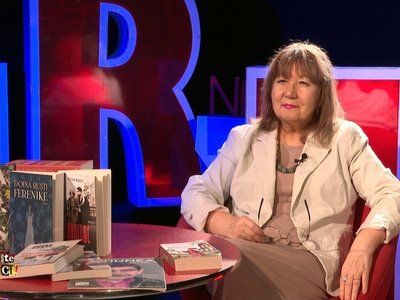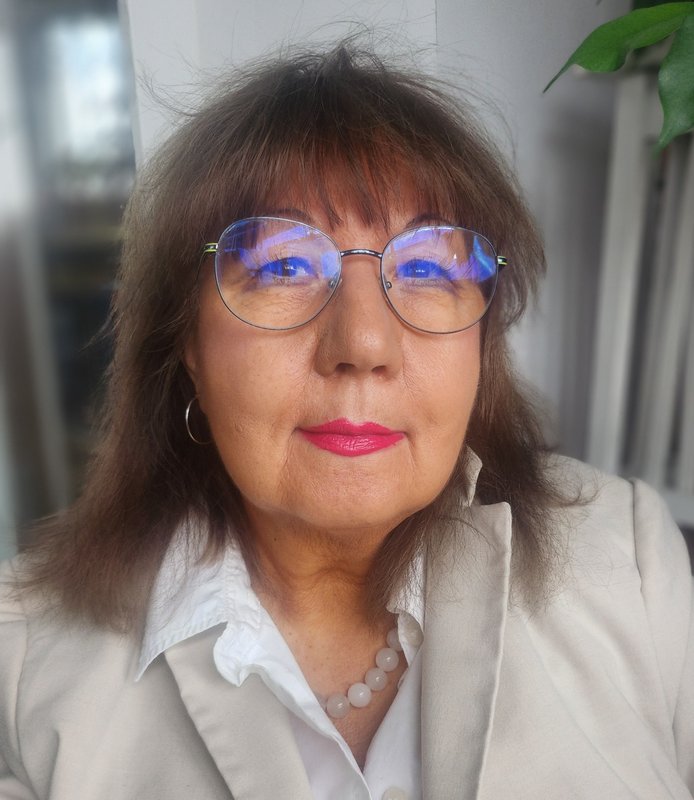
Published by Editura Youngart, Platanos is the novel in which Doina Ruști continues the story bearing the same title that was included in the 8th-grade Romanian language textbook published by Editura ART, a story that has fascinated many generations of students.
Here, the mysterious Platanos is seen through the eyes of the boy who longs to become his friend, but he also gains the chance to tell his own stories. In the interview below, you will discover details about the creation of the protagonist, about the anchors of a world in constant transformation, and about how the often unresolved crises of adolescence can generate emotions and desires powerful enough to change reality. At the same time, you will discover the creative echoes that reading the novel Platanos has sparked among young readers across the country.
Self-confidence and trust in my own strength. Whenever I have found myself in troubled situations, my personal daimon has appeared—that being we all possess from the very beginning, sharp, sometimes mischievous, full of irony or vanity. Often ready to discourage you.
And yet this daimon, with all its flaws, has always kept my morale high through an unreserved confidence in my chances. No matter how absurd the project I had begun might have seemed, it assured me that I would carry it through to the end.
I have never left anything unfinished. My life contains many actions—perhaps not all admirable—but certainly all of them completed. Finished. That is also where my joy in writing endings comes from, the most important part of a story. I believe it is one of the strengths of my writing.
I love the resolution because my inner god has never allowed me to leave things incomplete. That has given me not only spiritual comfort but also the belief that my desires will be fulfilled—that somewhere there exists a white scarf wandering through the world, drawing the map of my aspirations.
Few people are satisfied with the social position they inherit. Even though the subject is often taboo and people avoid speaking about this dissatisfaction, it persists until full maturity.
The bond between parents and children lasts a lifetime. In many situations both sides evaluate reality correctly and, despite their frustrations, continue to love their blood ties to the end.
Therefore, when Iulian decides to change the world, he does not dare subject his father to that transformation. He has an image of him, but also filial love, which prevents him from altering the condition of that father who exists in his mind.
Everything in the world is in constant metamorphosis—but never the father–son equation. Parents remain identical with the standard image preserved in the child’s mind: always young, always beautiful. And children remain children to their parents, even when they themselves grow old.
So Iulian wants the world to change—except for his stable landmarks: his father, the dog, the house. He will periodically return to them in order to regain his confidence. No renunciation is ever definitive.
Platanos first appears as the mysterious stranger, a fascinating presence. He arrives at the experimental treatment center where the first cases of Vegetality are studied. His presence dominates everything around him, just like the majestic plane tree to which he is metaphorically related.
Sisinel desperately wants to become his friend and turns him into a model—something that happens to all of us in moments of loneliness and insecurity. But models function only in the ideal world of aspirations. Celebrities remain on the screen, cultural personalities remain in books, and heroes exist only as historical effigies.
Sisinel encounters his first model and therefore takes the risky step of placing himself in the shadow of a plane tree.
From that point I continued the character, trying to reveal the many layers that hide a person’s true nature: Iulian is first fascinating, then the bearer of a credible story—the story of the experiments conducted by his imaginary father. Later he becomes the possible holder of the truth contained in the Striped Notebook.
All these are merely appearances that anyone may use to attract attention. In the end, Platanos becomes what any adolescent is: an insecure being, afraid of failure and dissatisfied with his social status.
An unresolved crisis, carefully maintained, eventually unleashes violence—anger directed against the world. And anger itself takes many forms: the instinctive rage of Achilles in the Iliad, for example. But there is also a kind of dissatisfaction that destroys initial intentions and even human nature itself.
The angry person believes he possesses absolute truth. Yet we should not forget that anyone consumed by anger also carries a drop of doubt within themselves. They wait for someone to stop them, to give them hope.
(Full interview available on the *website of Editura ART.)*