Everything begins with a small episode. One of the characters in the novel finds a pressed flower inside Homer’s Iliad. That flower changes his life. Sometimes a single petal discovered between the pages of an old book is enough for a novel to be born.
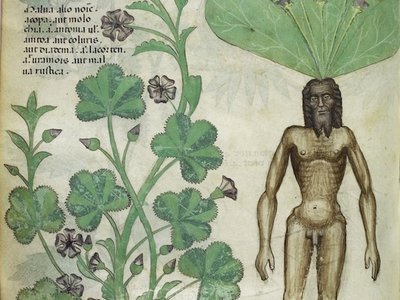
Old stories say that in the marshlands around Bucharest there once grew a flower highly sought after by alchemists. Local healers believed that from its sap one could obtain the long-desired elixir of life — the panacea that has haunted history. Gilgamesh’s lost plant. The red herb of the Vlăsiei Forest. It bore many names and generated many legends. Superstitions abound: do not smell it, or you are as good as dead; do not pull it out by the roots, or you will be infested with lice; gather it only after rain. Some say it was a banal plant growing in ditches, so small you barely noticed when it bloomed — except at dusk, when its scent filled the soul with an immense sadness.
This persistent belief in a miraculous plant became one of the starting points for Homeric.
When you wish to be loved, you return to a fundamental egoistic impulse — the same one that, in childhood, made you want a bicycle or another child’s toy, or cry because others did not see you, did not admire you.
People use grand words when they speak of love, forgetting that attachment — sometimes instantaneous — has the same roots, to speak in Lacanian terms, as petty desires or lofty aspirations. An encounter unsettles you, but instead of flying, regardless of education, you want to enter the other person’s soul, even if the only open door is that of humiliation.
Some say this excess comes from the anguish of loneliness. I believe it is a direct consequence of the grandiosity lying dormant in each of us. When the small person inside becomes inflamed, it wants to be seen, adored, recognized. Of all aspirations, love is the most accessible — inscribed both in our social record and in our genetic code.
Despina’s love is the core of a story about happiness and acute loneliness — states specific to the socially isolated: the uprooted, the orphaned, the marginalized. In a Bucharest of uncertain time, her dream of love descends into the obscure zones of obsession. From there begins a labyrinth that destroys the hopes of those without imagination, because this web is meant only for adventurers — for fantastic beings endowed with the organ of happiness.
Bucharest is the territory I conquered, for which I fought for many years. A city’s importance lies in the energy you spend on it and in the intensity of the events binding you to it. Years of commuting, followed by years of effort to understand its people and its inner labyrinth, made it far more precious than the place of my birth, received without effort. It is the city I chose.
In Homeric, however, story takes precedence. Although the novel contains a map based on a real territory, it is written in a fantastic register.
I would like readers to keep the joy I placed in every word, and to preserve a taste for things that lie in shadow — those details that do not immediately catch the eye, yet give the world its true flavor. I wanted to write a book about the “black sheep,” the excluded individual, and a love story seemed the best way to speak about these burdens. Beyond all this, I hid a message in Homeric for every reader — especially for those who feel the urge to begin the book again after finishing it.
I once had a student who was deeply attached to my intellectual model and unable to separate herself from it: she speaks like me, uses the same verbal tics, the same vocabulary, even writes books in my style. For a time, I considered myself guilty, burdened by what I saw as a pedagogical failure. But I came to realize that this episode illustrates very well what has been happening in literature over the past decades. We are living in the age of the most aggressive crisis of personality.
Excerpt from an interview originally published in Jurnalul Național.